
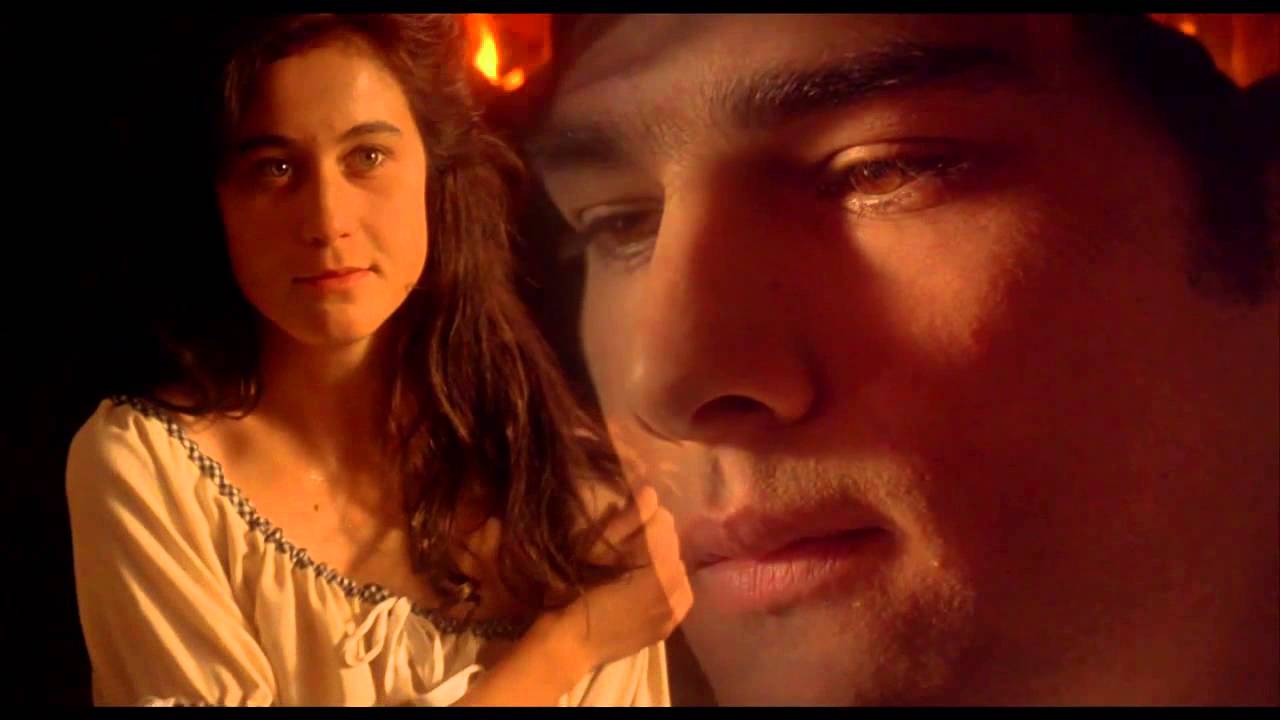
Like water for chocolate tells a love story from protagonist Tita’s notebook–read by her niece Esperanza. In it, she starts by recounting the day her Aunt Tita was born. Tita was born to a rich woman named Elena. Not long after Mama Elena gives birth to her, news reaches her husband that their second daughter is not theirs and the shock upon discovering that triggers a heart attack. Now that her husband was dead, it was the role of her youngest daughter, Tita, to take care of Mama Elena for the rest of her life. Fast forward several years, Tita falls in love with a boy she’s known as a child named Pedro. He and Tita begin to sneak around to meet each other much to Tita’s mothers’ disapproval. To punish her, when Pedro comes to ask for Tita’s hand in marriage, she tells him no and instead suggests that he marry her eldest daughter Rosaura, instead. Knowing that there would be no other way that Pedro could ever come near their home again, he accepts. It won’t be until about 20 or more years later that the obstacles keeping the two apart would finally come to an end, only for their love to end in a tragedy when Pedro dies in the middle of making love to Tita.

It was really interesting to me how symbolism was used in the film which is why I enjoyed it. For example, the most memorable scene for me was when Tita put in Roses in the Pigeon dish she made which was a sexual sort of experience between her and Pedro, and above all, Gertrudis. She goes as far as to strip away all her clothes and bathe, but she’s so heated that even a bucket in her shower lights on fire. This makes sense given that the roses were red and both red and roses are associated with fiery passion, love and sex.
What was also interesting to me was the gender roles were portrayed and how social standards harmed the women in this film. Mama Elena and her husband were married even though she was in love with someone else. She did not have the option to divorce, especially in those days when the majority of Mexico were stricter Catholics and it was something extremely shameful to go through. That said, Mama Elena became bitter, and even more so after her husband died. She was unhappy that she didn’t get be in love so she wanted to make her youngest daughter unhappy as well because of social standards. This would explain why Tita had wept for her mother when she died even though she had treated her horribly.
As for gender roles, I noticed that Tita was probably what people thought was the ideal woman back then. She cooked well, cleaned, kept her virginity for a long time, had sex twice in her whole life to the same man. Plus, she waited for Pedro, even though he was married and she could’ve chosen to marry another man that took far better care of her. Nevertheless, at least the movie made it clear she was not a bad person no matter what decisions she made. In fact, it somewhat surprised me when John forgave Tita for sleeping with Pedro instead of him whereas I feel like in many old stories, she would have been seen as a bad person and called a “whore”. Then again, I can’t tell if this story chose not to vilify her because she was saving herself for her “one true love”, or maybe they wanted to show that men can respect a woman’s decision to choose who she wants to love.
Despite social expectations for women, Gertrudis was also seen as a strong woman and again, this surprised me as well. I feel like movies in conservative settings would portray over-sexualized women with traditionally masculine traits in a bad way. Also, Mama Elena despite being unnecessarily cruel to Tita was also shown as strong and independent since she raised her daughters on her own under her husbands’ big ranch that she ran herself. Ironically this would mean that she, like her daughters broke tradition– which she was supposedly against.
For its time, do you think the portrayal of women was quite liberal or still pretty conservative?
 Reviews